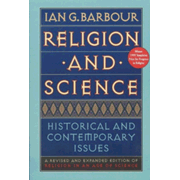
Is the interaction between science and theology mainly characterized by conflict, or is there room for a proper synthesis? Since the enlightenment, many have felt that science either undermined the credibility of religion, or did away with the necessity of religion all together. Barbour feels that religion is still necessary, perhaps more so than ever. In Religion and Science (the revised version of Religion in an age of Science), he asserts that religion must adapt to the new ways of understanding the world achieved by science, if it is to remain relevant.
This assertion comes from his observations on five features of the so-called scientific age that we live in. The first feature, the success of the methods of science, carries with it questions about the success or reliability of religious knowledge as compared with scientific knowledge (scientific knowledge=empirical knowledge). The second feature, a new understanding of the nature of reality, seeks to compare and contrast religious accounts of human creation to scientific events like the Big Bang and the gradual process of evolution. The third, a new context for theology, focuses theology squarely on the doctrine of human nature and the doctrine of creation, with the conclusion that process theology offers the best answer to God's continual interaction with creation. Feature four is religious pluralism, with its subsequent respect for tolerance and diversity, and a distancing from absolutist or exclusive claims for any religion or tradition within a religion. The final feature is ecological, dealing with threats to the environment, and the responsibility of religions to create a sustainable environmental ethic.
Religion and Science helps to focus our attention on the real and vital questions that science is asking of religion in general, and, more specifically, Christianity. Ultimately, science and religion must work together to offer people the broadest explanation of reality possible. Barbour posits a Christian faith that responds both to its source, the Bible, and to science.